Sensory Processing Disorder Education
“Sensory Processing Disorder (SPD) is a condition where the brain struggles to receive, organize, and respond to information coming from the senses. People with SPD may be overly sensitive or under-sensitive to everyday stimuli like light, sound, texture, and movement, which can severely impact daily functioning.”- Columbia University Doctors

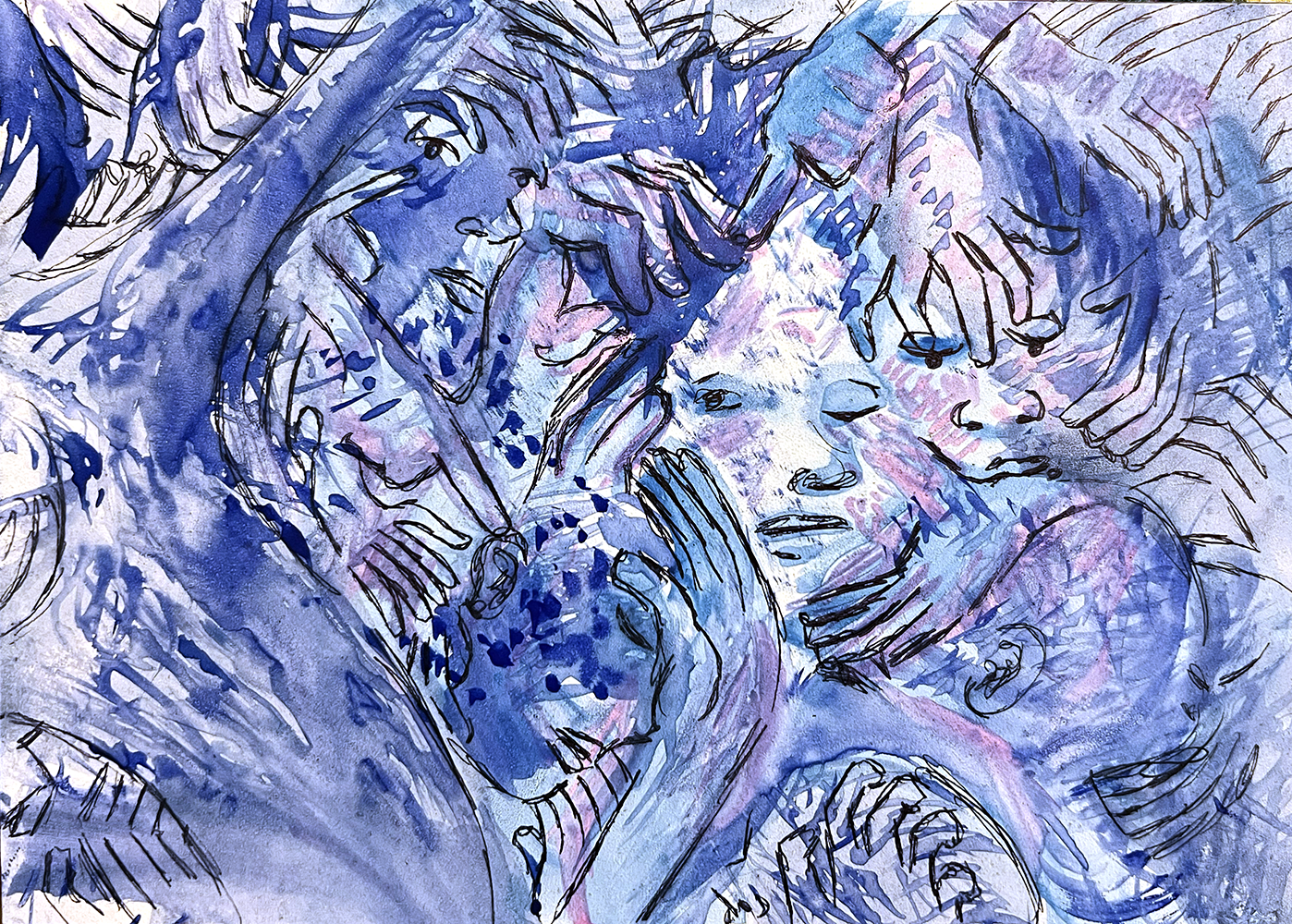
Emma Rarick. “Escaping an Overstimulated Body,” May 2026, 8.5×11” ink painting on paper.
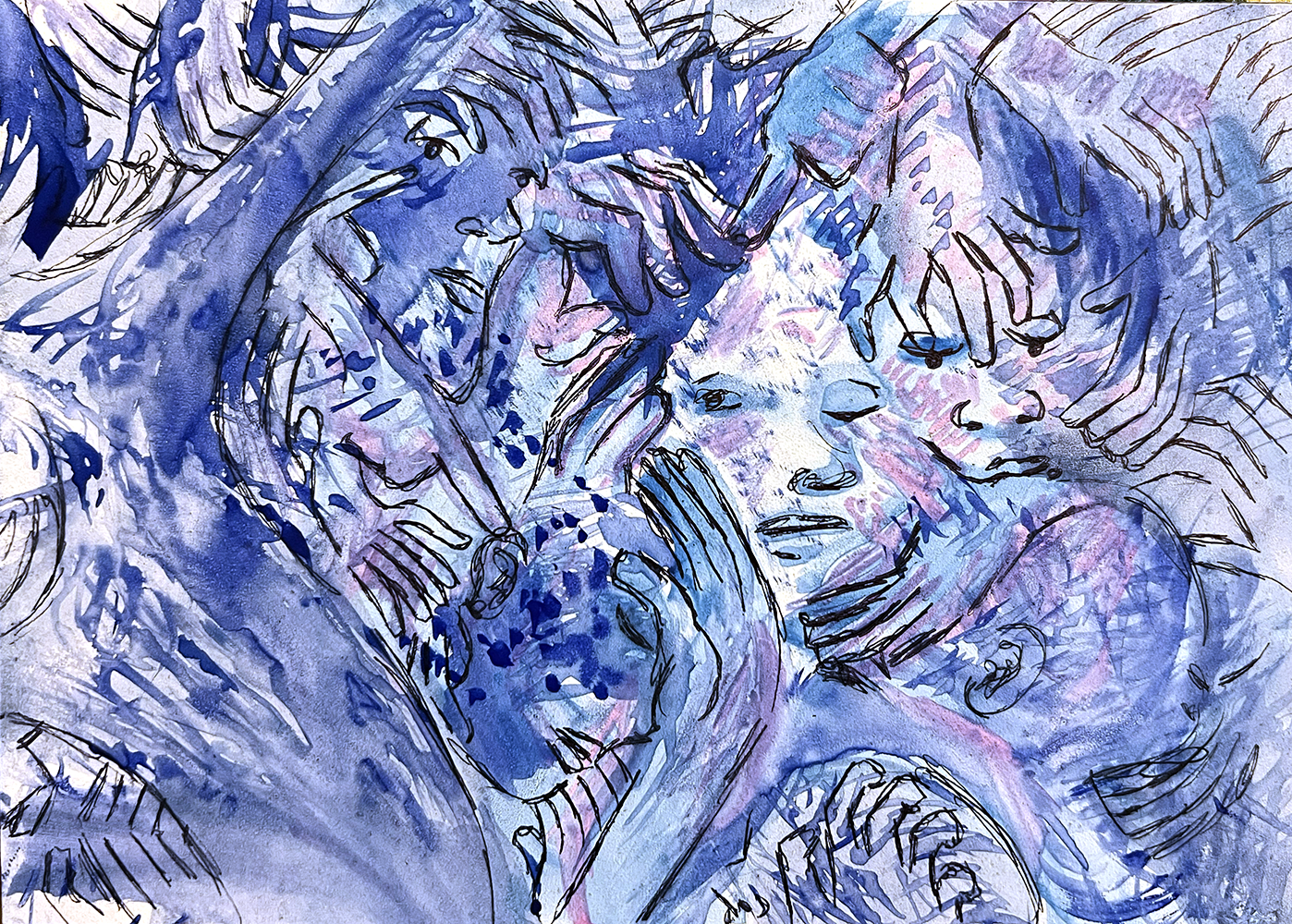
Emma Rarick. “Overstimulated #6,” May 2026, 5×7” watercolor & ink painting on board.
What is Sensory Processing Disorder?

Written by Emma Rarick, June 9, 2026.
Sensory Processing Disorder (SPD) is an invisible disability and a sensory disability where the brain processes the world a bit differently. For those of us who have it, we can experience an over-awareness, an under-awareness, or a fluctuating mix of both across all seven of our senses, all at the exact same time.
To understand the over-awareness, or hypersensitivity, imagine sitting in a room right now, and suddenly someone says, “do you hear the sound of the air conditioner?'“ I always remember being absolutely baffled by this activity when my teacher said it in one of my high school classes. Most people in my class were amazed to realize that they hadn’t been able to hear the sound of the air conditioner until she mentioned it, while I was confused as to why other people couldn’t hear that sound before she said it. To this day, it is still mind blowing to me that you can just turn on and off your ears when you want to hear the air conditioner or not.
For someone with SPD, we can’t tune out any of the sounds around us. We always hear all the air conditioners along with many other sounds around us because the volume knob on our environment is permanently stuck on high. We are constantly, vividly aware of every sensory experience inside and outside our bodies from the moment we wake up to the moment we go to sleep. We feel the texture of our clothes running around our skin like a swarm of bugs racing around our bodies. The hair on the back of our necks and legs that wiggles in the wind makes sleeping a difficult task. We notice the subtle tilt or balance of the flooring beneath our feet, and may be startled by an unexpected drop in the height of the floor. We are always feeling the rhythm of our heartbeat, the food we digest, and the subtle shifts in our body temperature as we hear and experience the world. A person with SPD can’t tune out their senses, or choose what senses we focus on, but we can pretend we know how to do that when we aren’t overwhelmed by everything the world has to offer.
On the flip side, experiencing an under-awareness, or hyposensitivity, feels like the world is duller, leaving us craving sensory input just to feel grounded. To compensate, we seek out intense sensations to help our brains feel in control of our body. This is why we might give the longest, tightest bear hugs to get that deep pressure, or why we might seek out incredibly spicy or sour foods just to vividly experience taste. We might even stomp our feet or purposefully bump into things, which is just our subconscious looking for a firm connection with the ground and gravity.
Living with this constant, processing of the world’s sensory experiences is exhausting. Eventually, our systems overheat, and our energy is depleted, leading us to experience sensory overload, panic attacks, or burnout. However, the good news is because we live this everyday, we are the experts of our own bodies. We know, or are learning, exactly what accommodations we need to communicate or request in order to feel safe and successful everyday. Many of us spend years in occupational, speech, or language therapy to develop coping mechanisms so we can navigate a world that wasn't built with our experiences in mind. Constantly interacting with environments that refuse to support a sensory-friendly space that would allow us to feel safer in our bodies, and people who lack the compassion to attempt to trust our experience of the world, can be a huge hurdle in who people with SPD become.
SPD is not something that is separate from us. It is a part of everything we do for better or for worse. SPD is a disability that anyone can be born with and that sticks with them throughout their entire life. Although it is a difference, it is important to remember that it does not require fixing as it does not mean we are broken. It requires acceptance, a willingness to accommodate, education, patience, and curiosity.
If you love someone with Sensory Processing Disorder who is a child or an adult, I would highly encourage you to watch the simulation video of the over-awareness, or hypersensitivity, component of having SPD linked in the 1st blue button below. This video was created by the National Autistic Society because SPD is under researched and oftentimes paired with Autism, but I can confirm this video is pretty realistic. Thanks for being here!

8 Senses? I thought we only had 5?
Sensory Processing Disorder is a lifetime disability that affects the our 8 senses. These senses include:
Vision (Sight): Interpreting what you see, such as being overwhelmed by bright lights or struggling with visual tracking.
Auditory (Hearing): Processing sounds. This can manifest as being highly sensitive to loud, unexpected noises, or conversely, not reacting to sounds.
Tactile (Touch): Feeling physical contact. This might include an intolerance to certain clothing textures (sensory avoidance) or needing to touch everything.
Olfactory (Smell): Processing odors, which can lead to extreme reactions to typical daily smells.
Gustatory (Taste): Processing flavors, often resulting in extreme picky eating or a very limited diet based on texture and taste.
Vestibular (Movement and Balance): Senses related to movement and gravity. People with this issue might appear clumsy or, conversely, constantly crave spinning and swinging.
Proprioception (Awareness of muscle and joint movements): Knowing where your body parts are in space. This can result in being accident-prone or having difficulty grading the force of movements (e.g., pushing too hard when writing).
Interoception: (Awareness of internal body sensations, including hunger & thirst): The ability to feel what is happening inside your body, such as recognizing hunger, thirst, or heart rate.
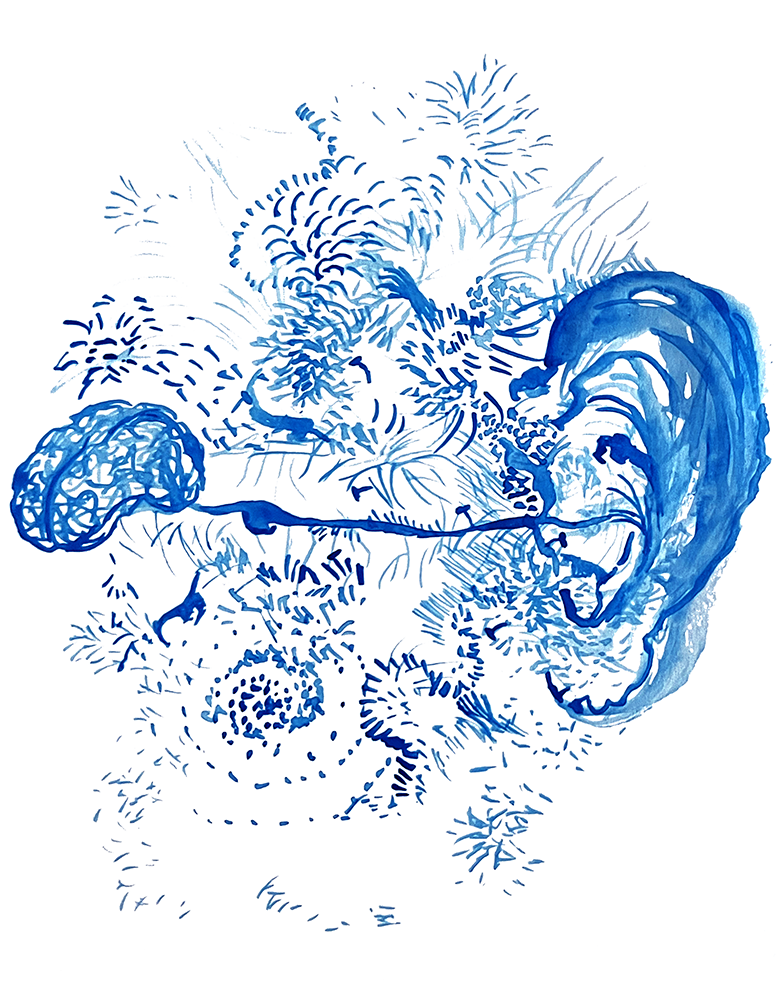
Emma Rarick. ““Overstimulated Ear,” May 2026, 8.5×11” ink painting on paper.
What is Sensory Overload?
When the body receives more sensory input than it is capable of processing or understanding the body feels a sense of sensory overload. This neurological overstimulation often results in extreme irritability, physical pain in the body, anxiety, difficulty concentrating, and or a complete shutdown response.
Adaptive Fashion, Tools, & Systems
Adaptive tools are vital for people with Sensory Processing Disorder (SPD) because they bridge the gap between their unique sensory needs and the demands of their environment. I’ve linked some of my most helpful SPD adaptive tools for you to check out below.






Americans with Disabilities Act (ADA) laws & Accommodations
Accommodations for people with Sensory Processing Disorder (SPD) are critical because they address the structural barriers to learning and participation caused by atypical sensory responses. Without these adjustments, everyday environments can become physically and mentally overwhelming, leading to severe anxiety or behavioral outbursts

More SPD Resources
You are not alone. Check out more SPD/Neurodiversity books, podcasts, & articles below.