July is Disability Pride Month!
Disability Pride Month promotes visibility, challenges ableism, and fosters pride in the disability community. It also honors the 1990 signing of the Americans with Disabilities Act (ADA).
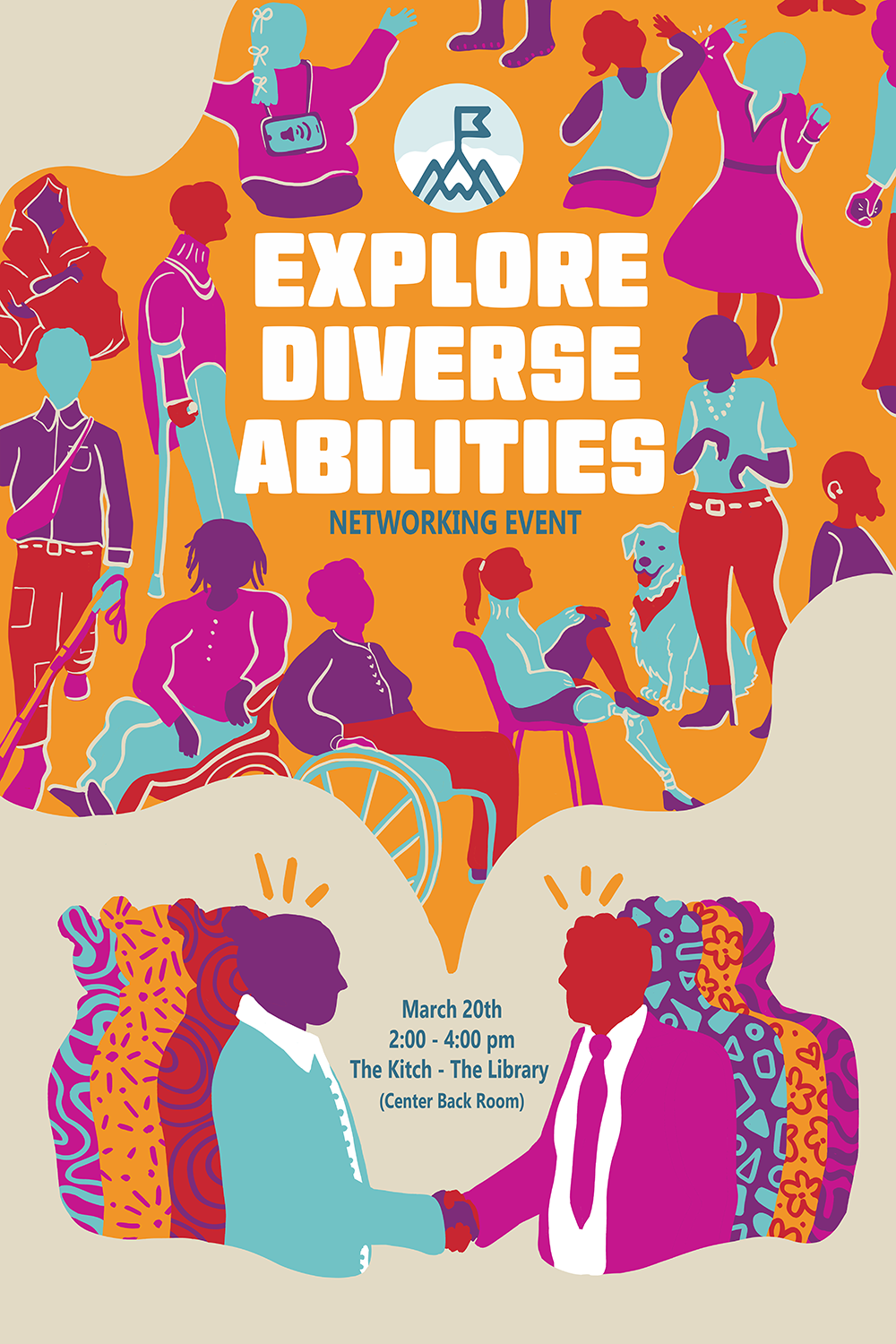
Shape-based 11x17" poster graphic of diverse people with disabilities in a speech bubble. Between the speech bubble two people in work attire shake hands. The words on the poster advertise Kohl's Corporate Explore Diverse Abilities Networking Event.
Explore Diverse Abilities Corporate Office Networking Event Advertisement
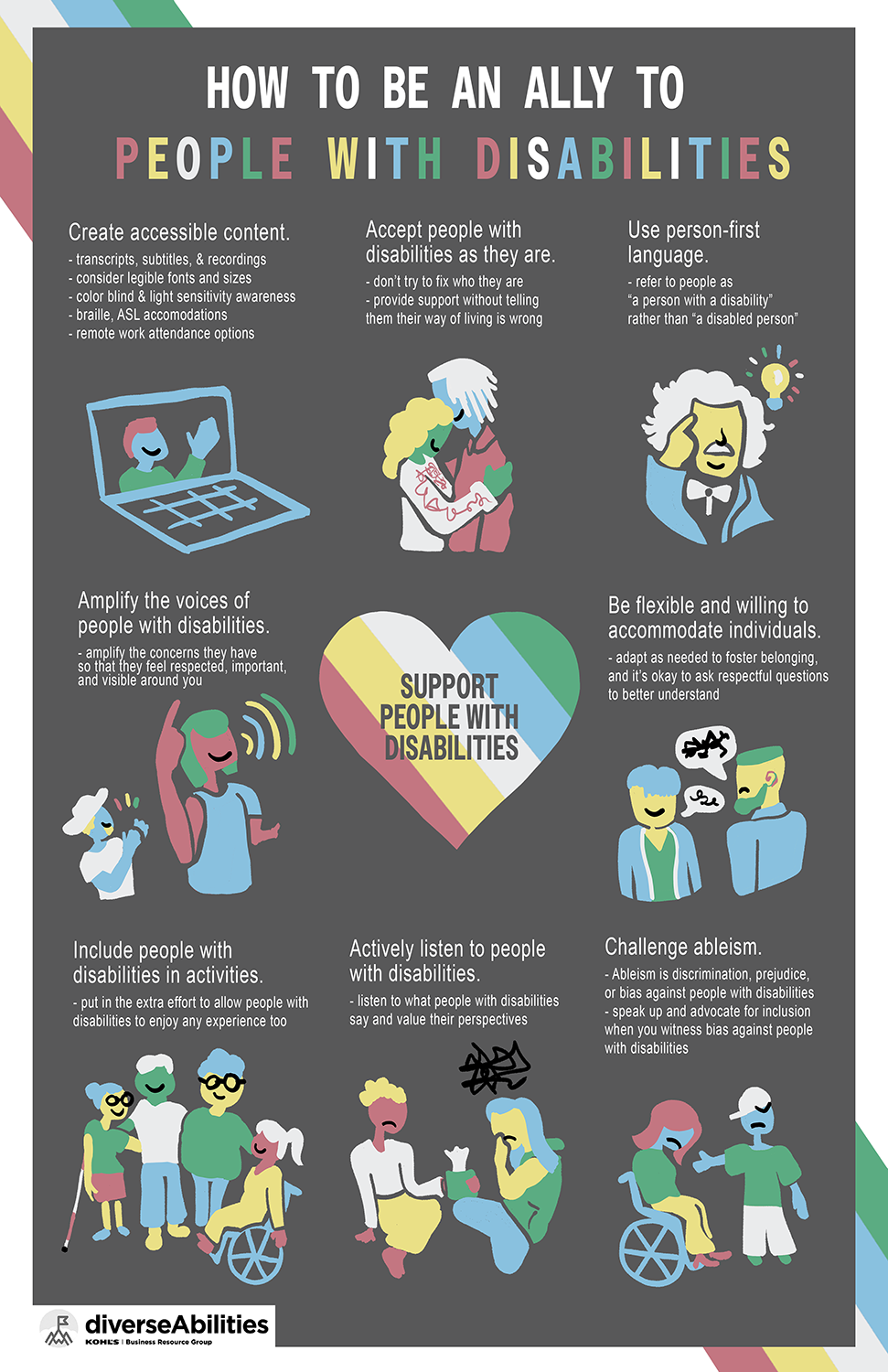
Shape-based 11x17" informational poster in the disability pride flag colors that describes how to be an ally to people with disabilities to help promote disability pride. If you want to be an ally to people with disabilities try to: 1. Create virtual content with accessibility features in mind. 2. Accept people as they are. 3. Use person-first language. 4. Be flexible and willing to accommodate. 5. Challenge ableism. 6. Listen. 7. Include people with disabilities. 8. Amplify the voices of people with disabilities.
How to Be an Ally to People with Disabilities Support Poster
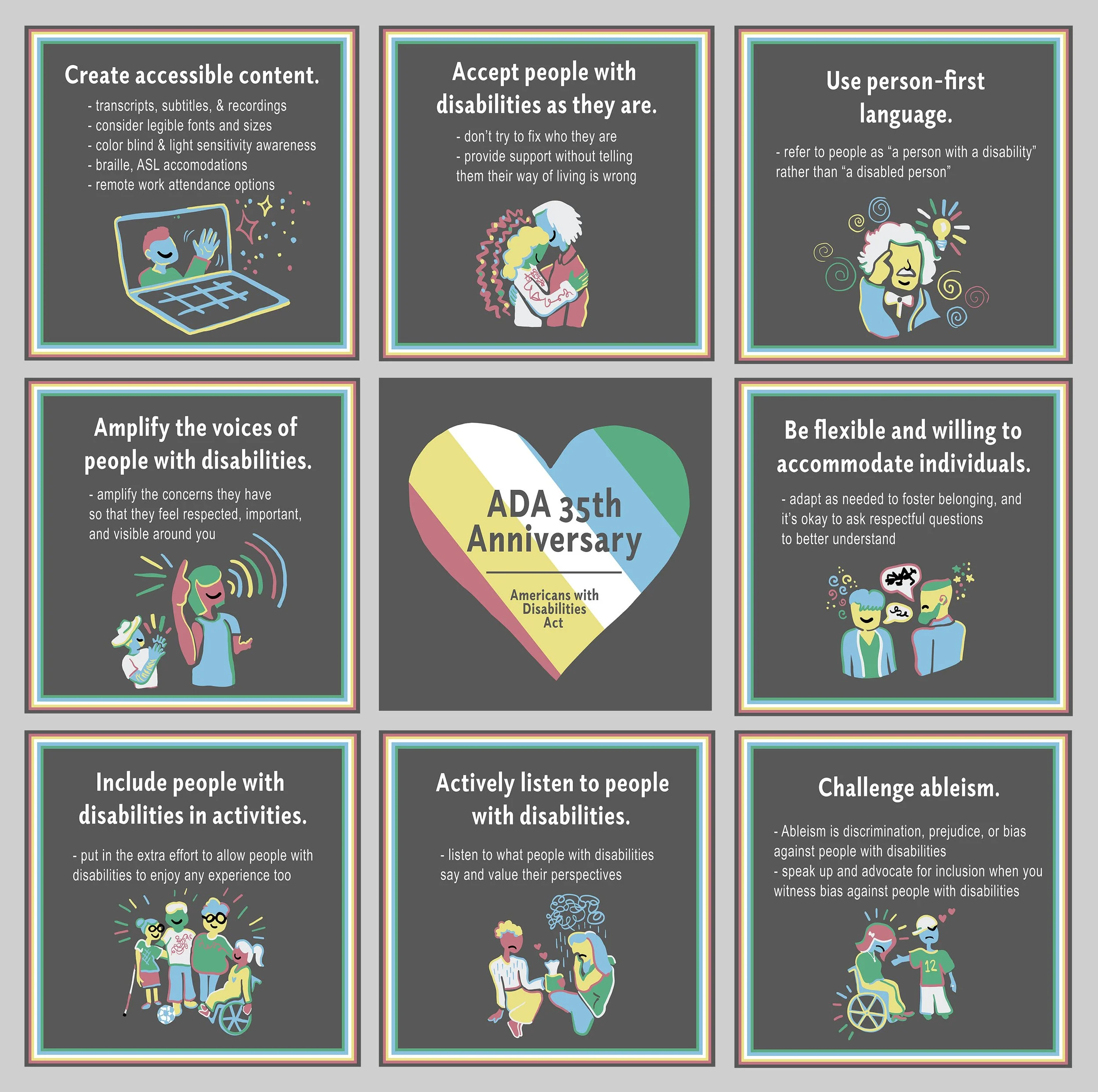
Shape-based informational 9 square grid covering 3x3' of space. This poster is in the disability pride flag colors and describes how to be an ally to people with disabilities in order to help promote disability pride. If you want to be an ally to people with disabilities try to: 1. Create virtual content with accessibility features in mind. 2. Accept people as they are. 3. Use person-first language. 4. Be flexible and willing to accommodate. 5. Challenge ableism. 6. Listen. 7. Include people with disabilities. 8. Amplify the voices of people with disabilities.
ADA 35th Anniversary Corporate Office Celebration Poster
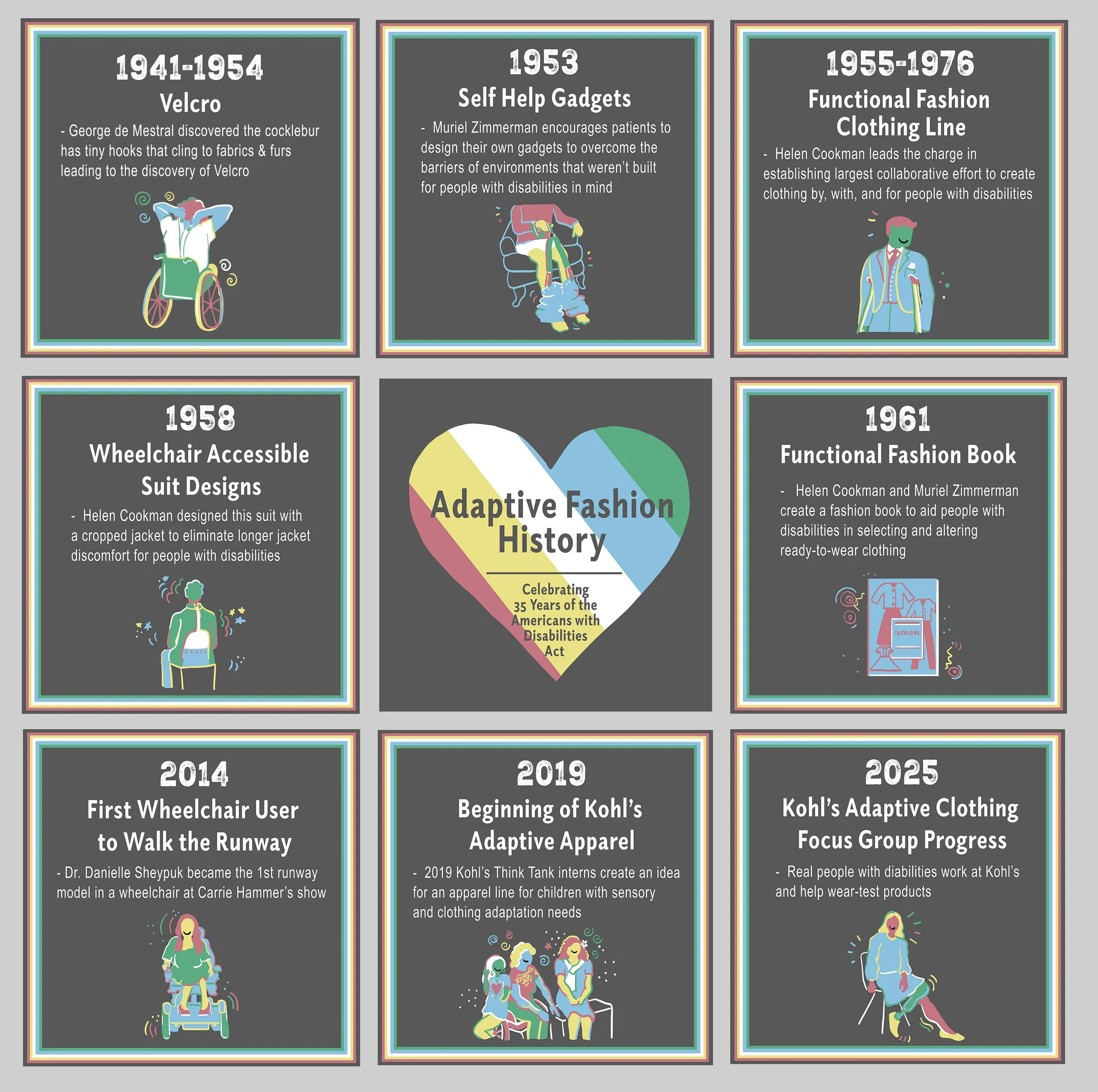
Informational 9 square grid covering 3x3' pf space that describes the history of Adaptive Fashion. Information includes: 1941-1954 invention of Velcro, 1953 introduction of self help gadgets, 1955-1976 Helen Cookman's functional fashion clothing line, 1958 introduction of wheelchair accessible suits, 1961 Functional Fashion Book was published. 2014 1st wheelchair user to walk the runway, 2019 beginning of Kohl's adaptive apparel, 2025 Kohl's adaptive clothing focus group progress.
ADA 35th Anniversary Corporate Office Celebration Poster
About Kohl’s diverseAbilities BRG Disability Pride Month Project
Emma Rarick led the company-wide art direction and creative production for Disability Pride Month (June–July 2026). She developed and executed the visual concept for the BRG celebration space at Kohl’s corporate headquarters.
In addition to directing the overall creative vision, she initiated and managed a team of artists—reviewing art direction, providing feedback, and delegating responsibilities—to collaboratively produce a series of Disability Pride themed coloring pages. Her leadership reflects a strong ability to guide creative teams while maintaining a cohesive and impactful visual narrative.
Continued Disability Pride Illustrations
Emma Rarick made one illustration a day celebrating her disability pride in her Continued Disability Pride Illustrations project. This was not in collaboration with Kohl’s, but was inspired by her collaboration earlier this year.
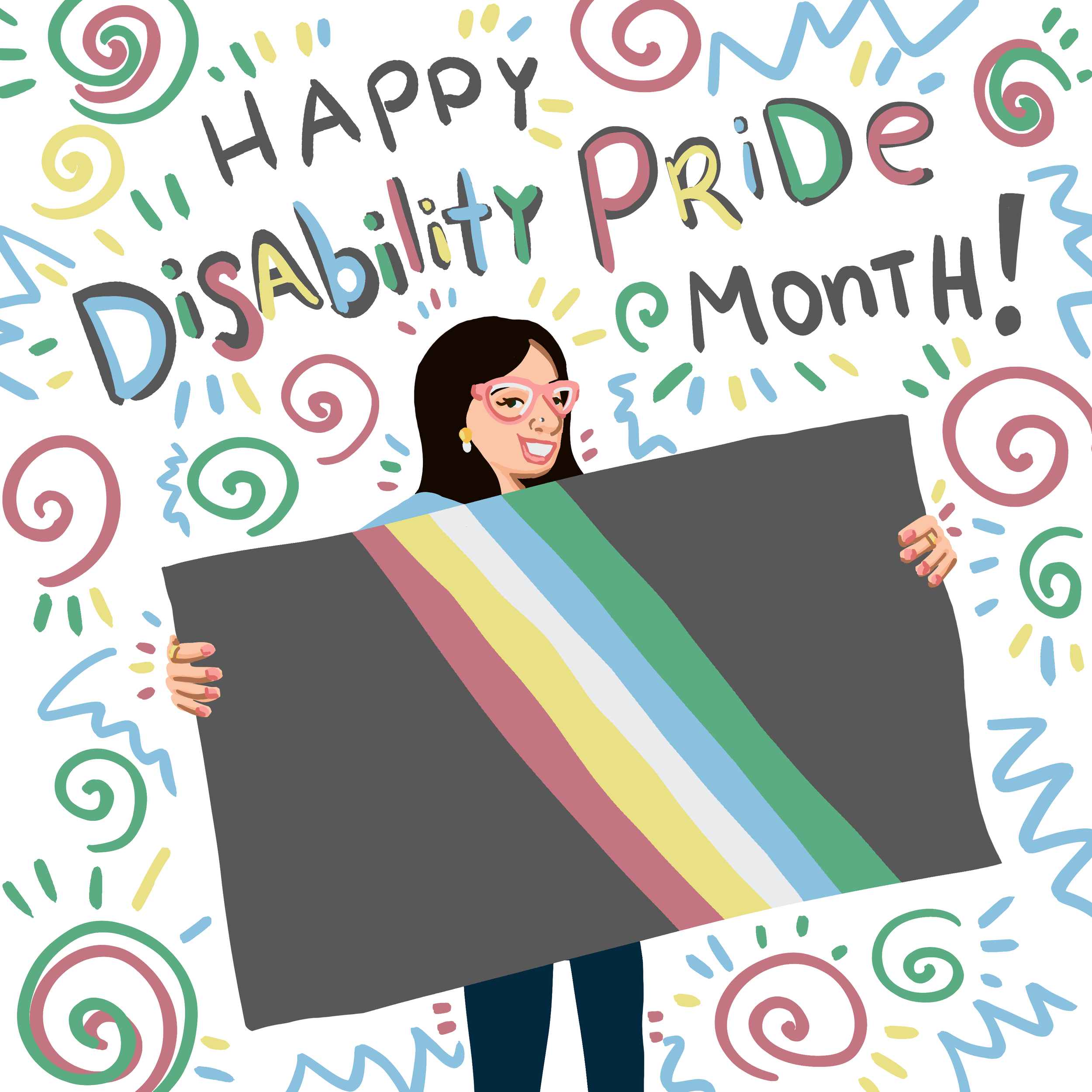
Women holding a disability pride flag with text above her reading Happy Disability Pride Month. The background is filled with swirly shapes using grey, red, blue, green, and white colors to represent the flag.
Happy Disability Pride Month
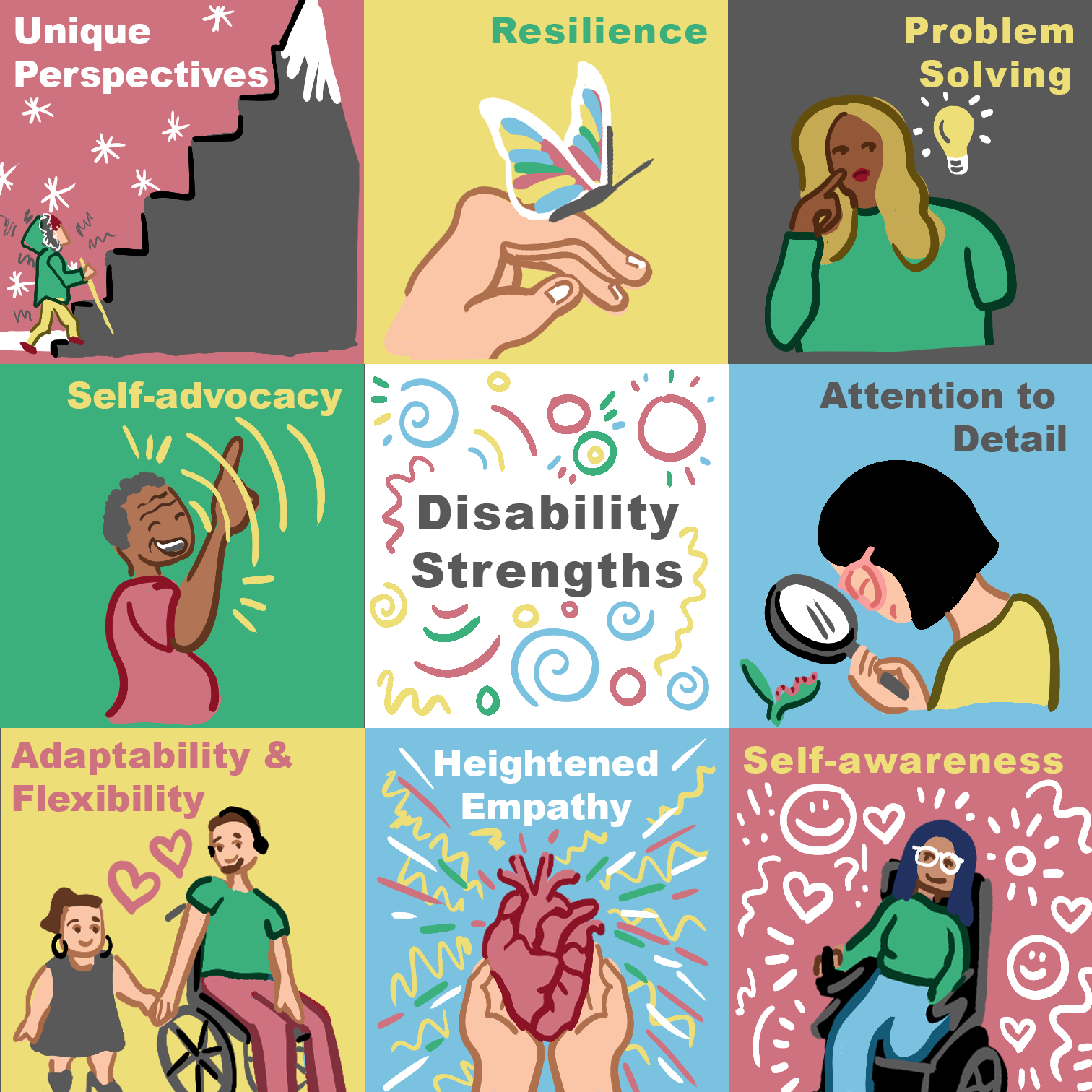
Illustration of a 9 square grid emphasizing strengths people with disabilities have. They offer unique perspective, resilience, problem solving, attention to detail, self-awareness, heightened empathy, adaptability, and self-advocacy.
Disability Strengths
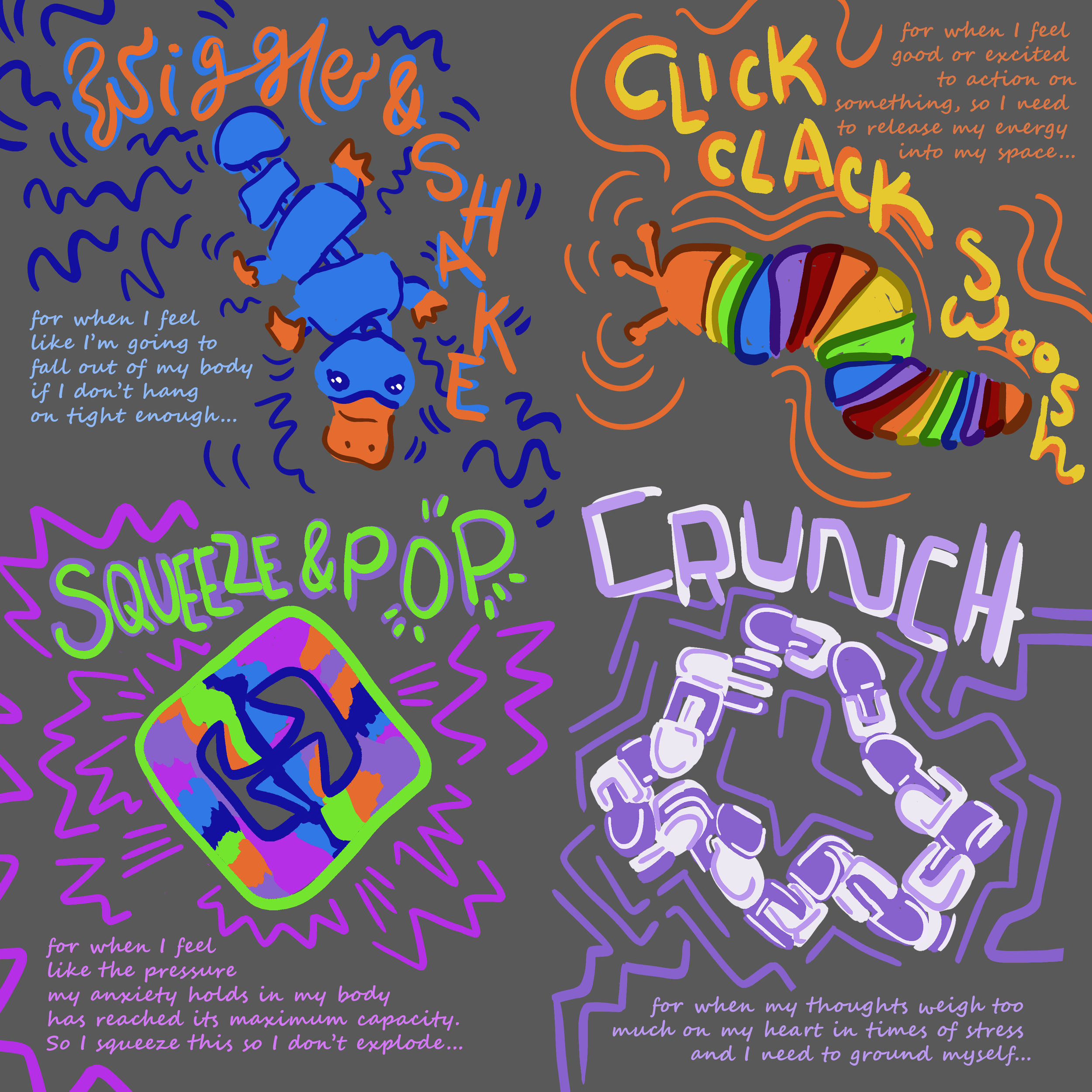
Illustration of four different fidget toys that Emma loves. Including a wiggly platypus, a wiggly rainbow slug, a squeeze and pop fidget, and a crunchy chain shaped fidget.
Fidgets
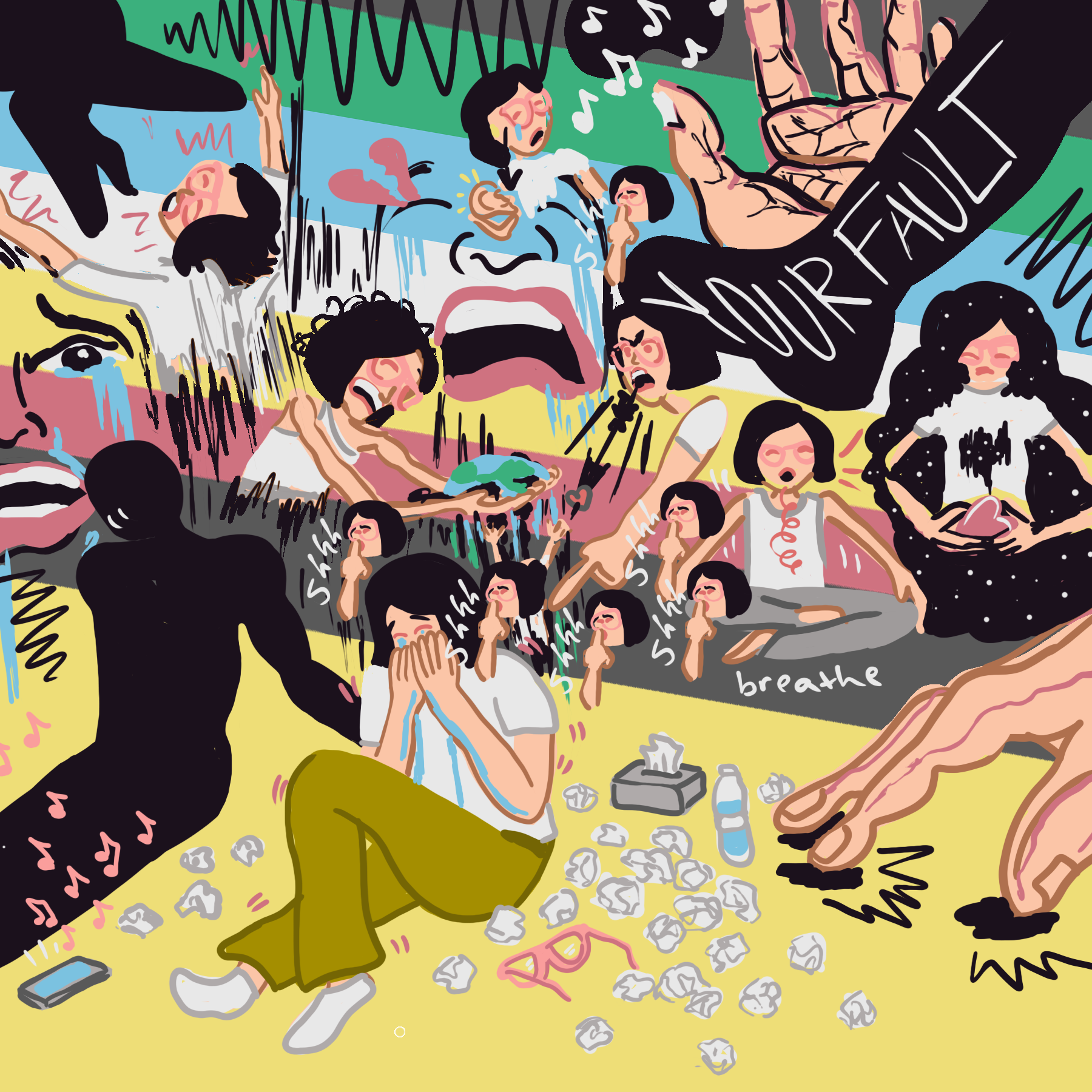
Illustration of a woman enduring a panic attack. Many negative and depressed versions of the woman exist at one time and it is hard for the women crying on the floor to understand which women are real and which aren't. A silhouetted figure is shown trying to comfort the woman.
Panic Attacks
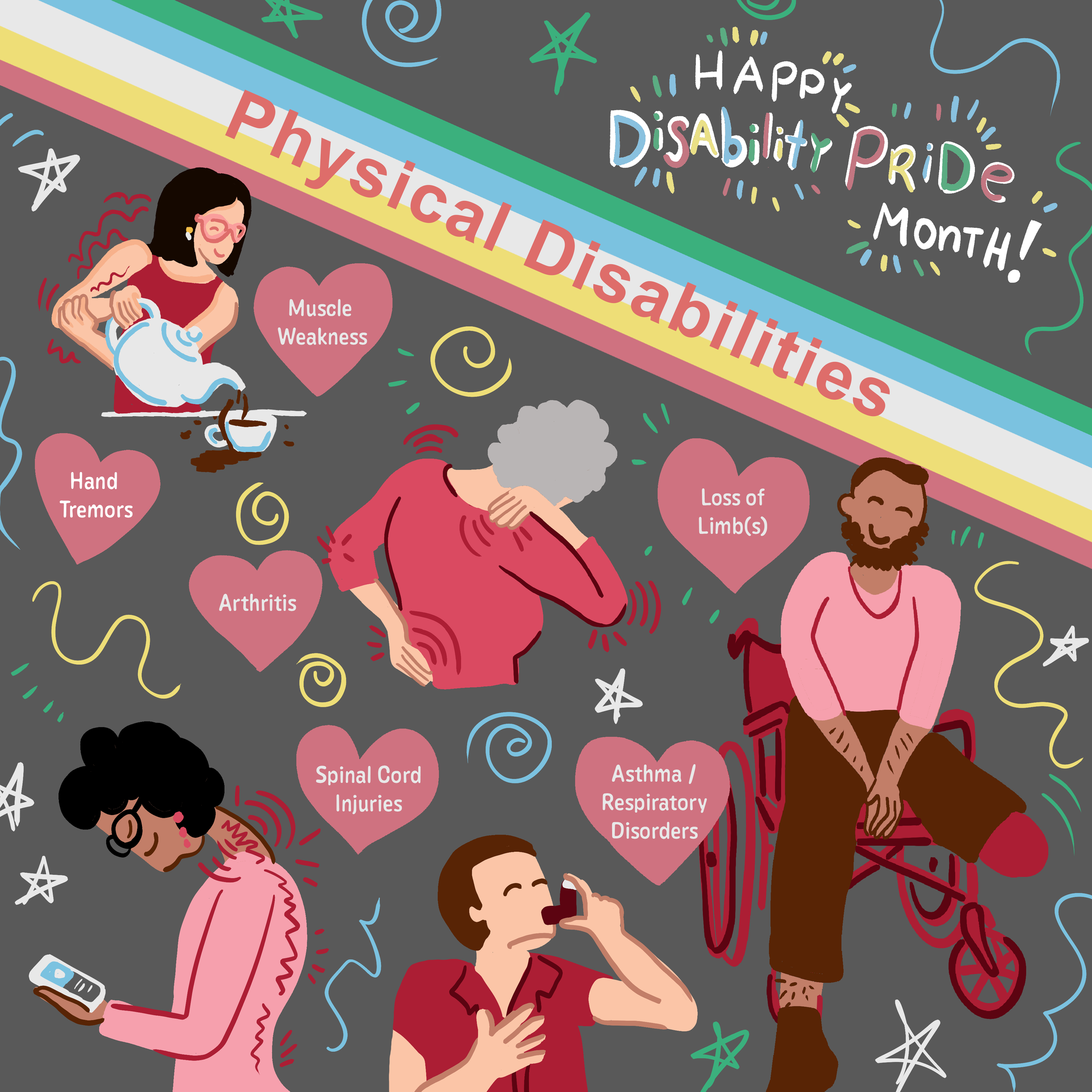
Informational illustration describing examples of Physical Disabilities represented in the red color of the flag. Examples: muscle weakness, loss of limbs, spinal cord injuries, asthma, arthritis.
Red- Physical Disabilities
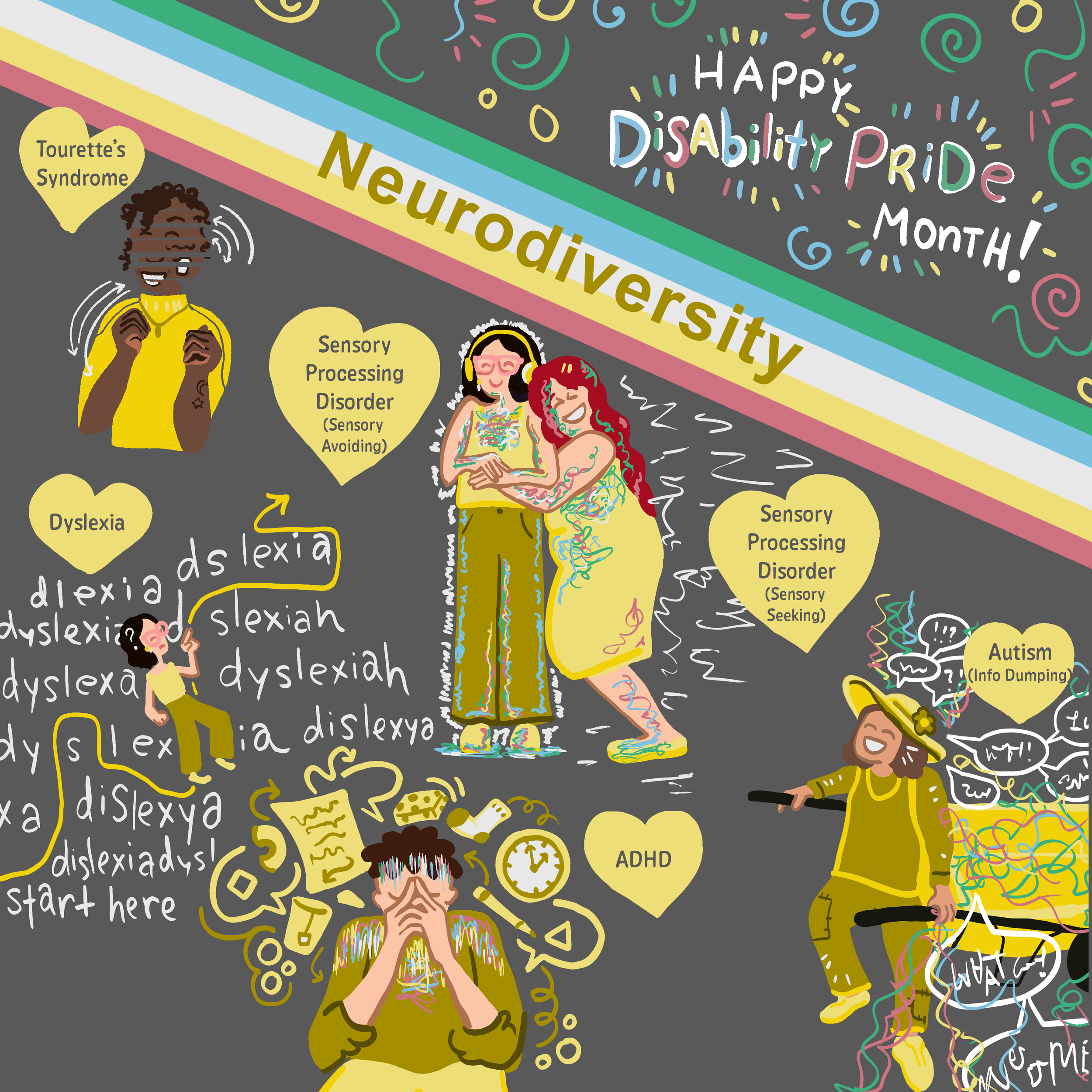
Informational illustration describing examples of Neurodiversity represented in the yellow color of the flag. Examples: Tourette's, Sensory Processing Disorder, ADHD, Autism, & Dyslexia.
Yellow- Neurodiversity
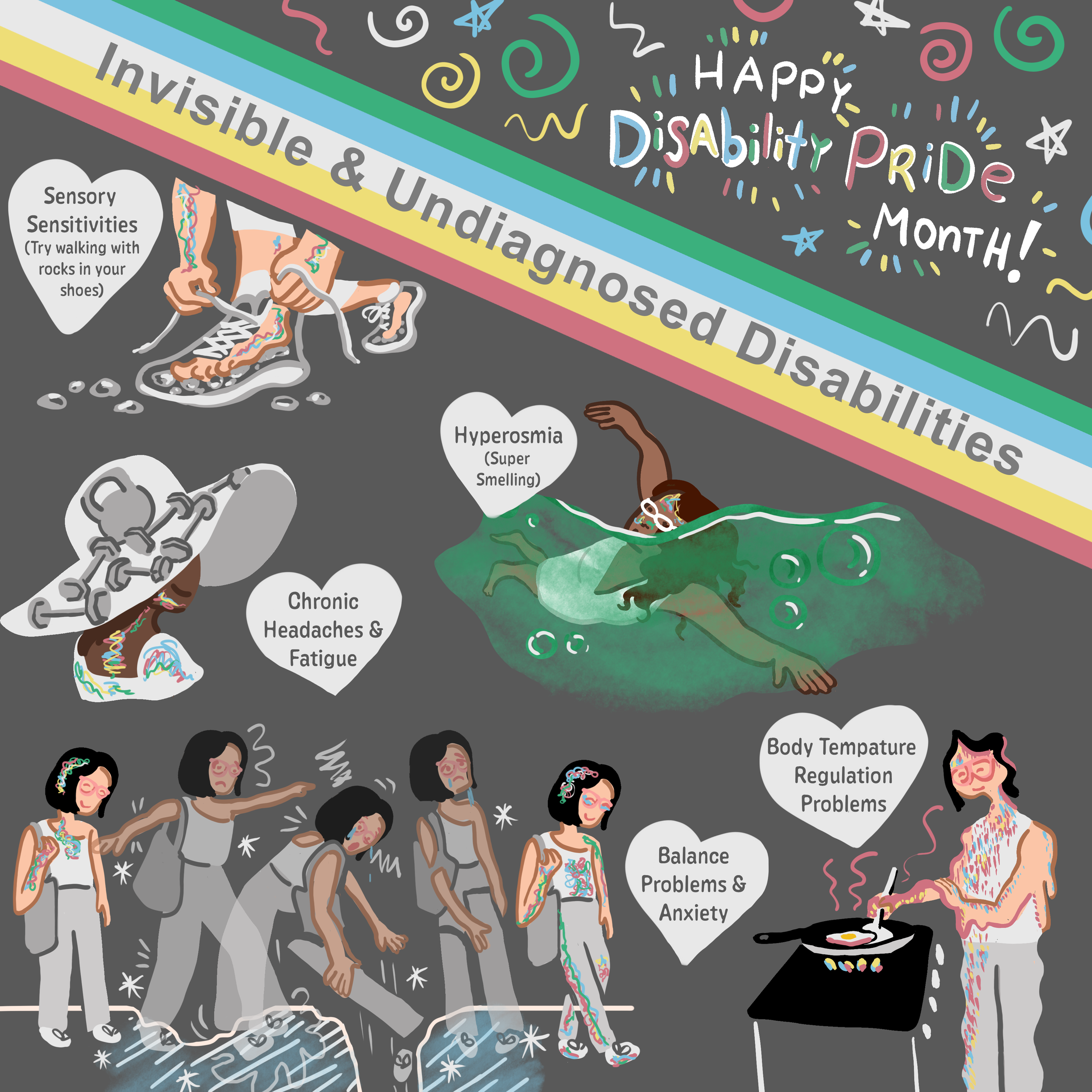
Informational illustration describing examples of Invisible & Undiagnosed Disabilities represented in the white color of the flag. Examples: sensory sensitivities, hyperemia, chronic headache, fatigue, body temperature regulation, balance issues.
White- Invisible & Undiagnosed Disabilities
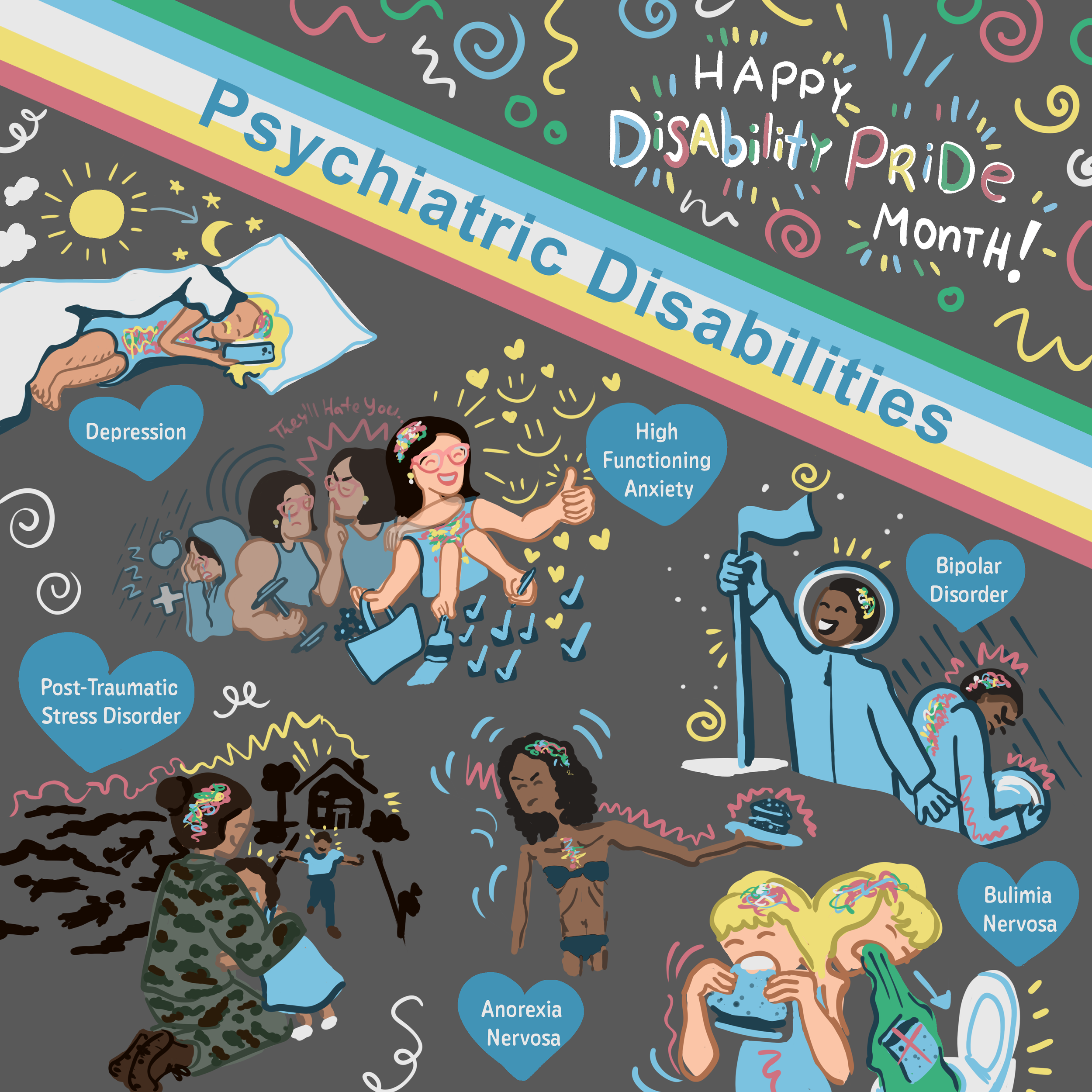
Informational illustration describing examples of Psychiatric Disabilities represented in the blue color of the flag. Examples: depression, PTSD, high functioning anxiety, anorexia, bulimia, bipolar disorder.
Blue- Psychiatric Disabilities
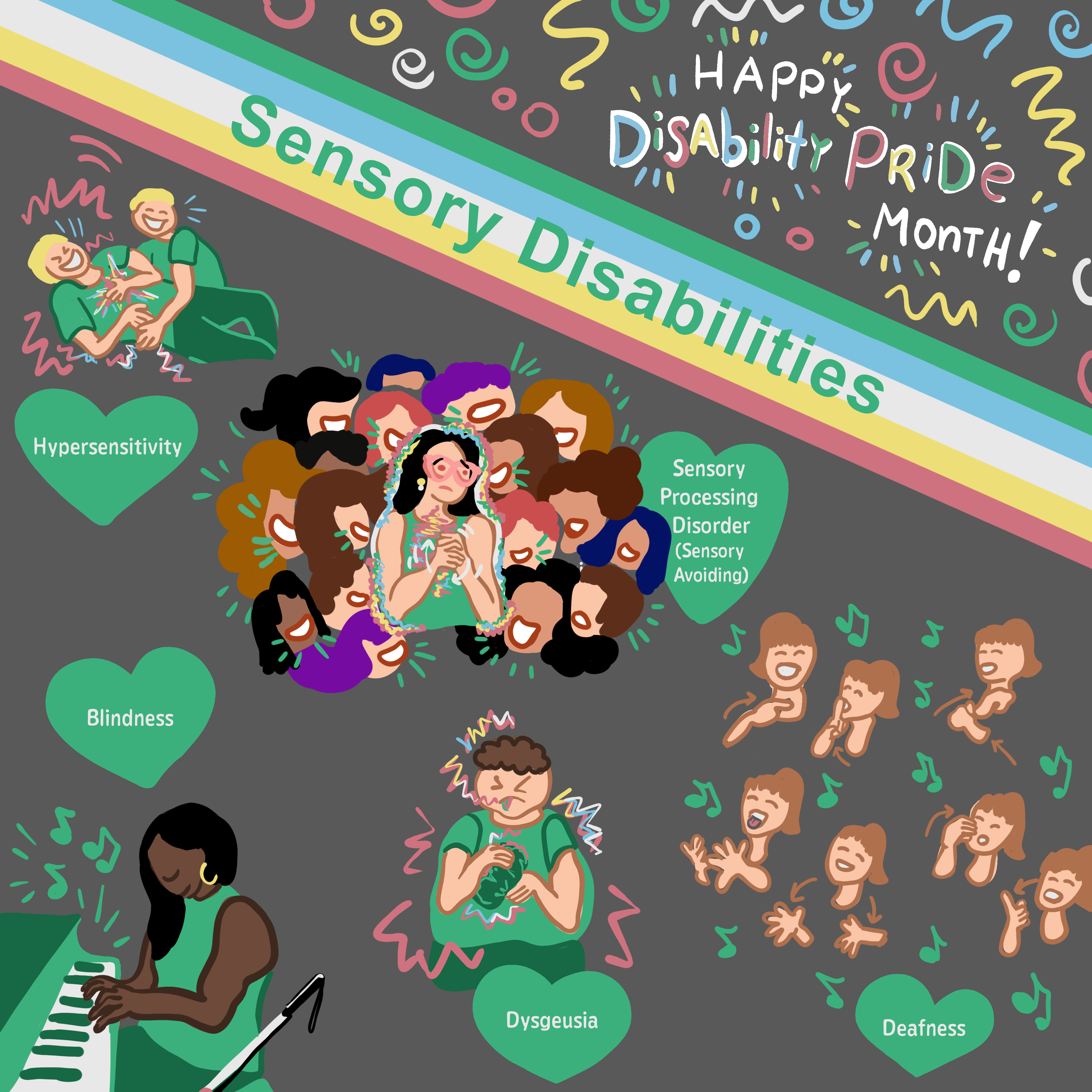
Informational illustration describing examples of Sensory Disabilities represented in the green color of the flag. Examples: deafness, dysgeusia, blindness, hypersensitivity, sensory processing disorder.
Green- Sensory Disabilities
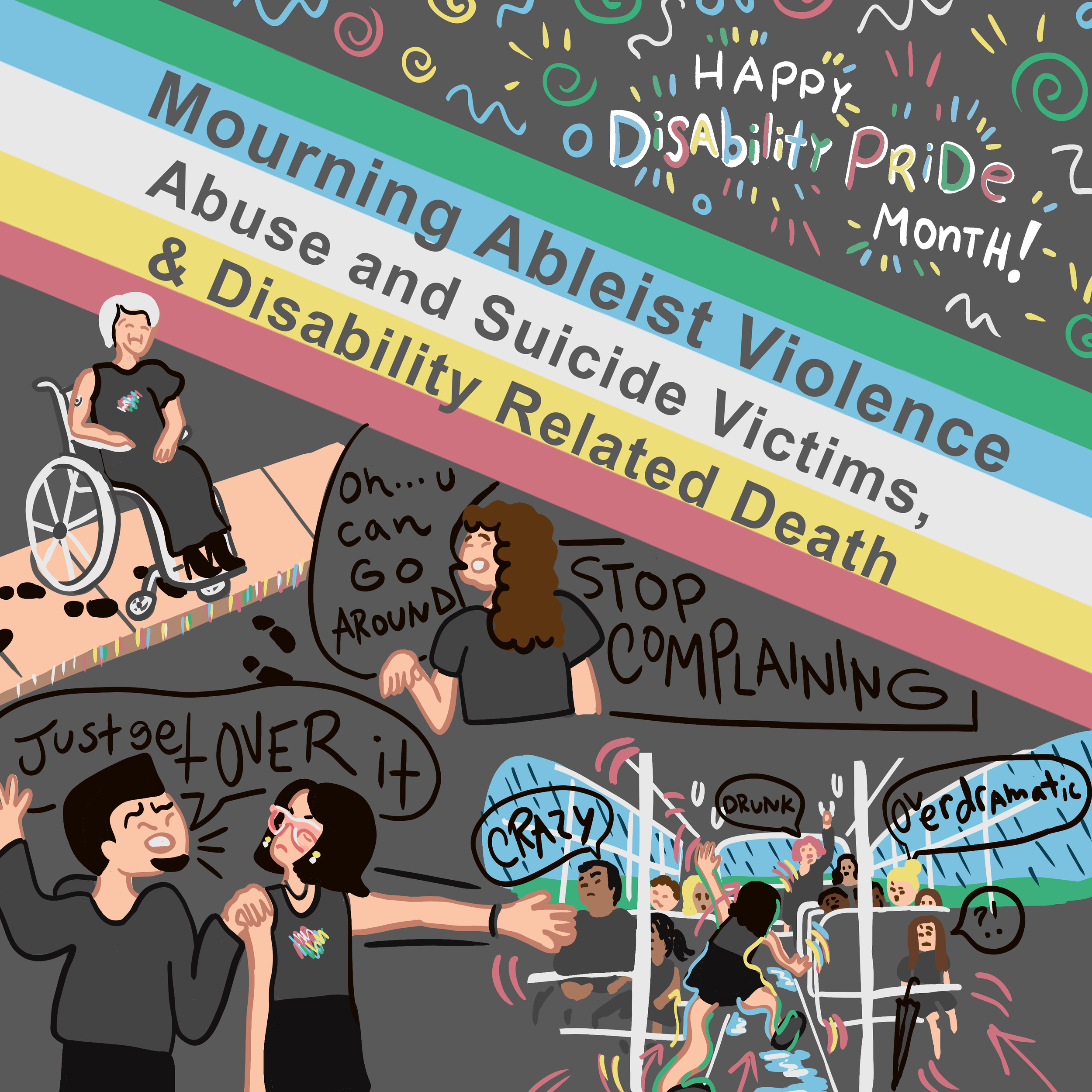
Ableism is discrimination, prejudice, and social oppression against people with disabilities, based on the belief that non-disabled bodies and minds are superior. Informational illustration describing examples of Ableist Violence, Abuse and Suicide Victims, & Disability Related Death represented in the grey color of the flag.
Grey- Mourning Ableist Violence, Abuse, and Suicide Victims, & Disability Related Death
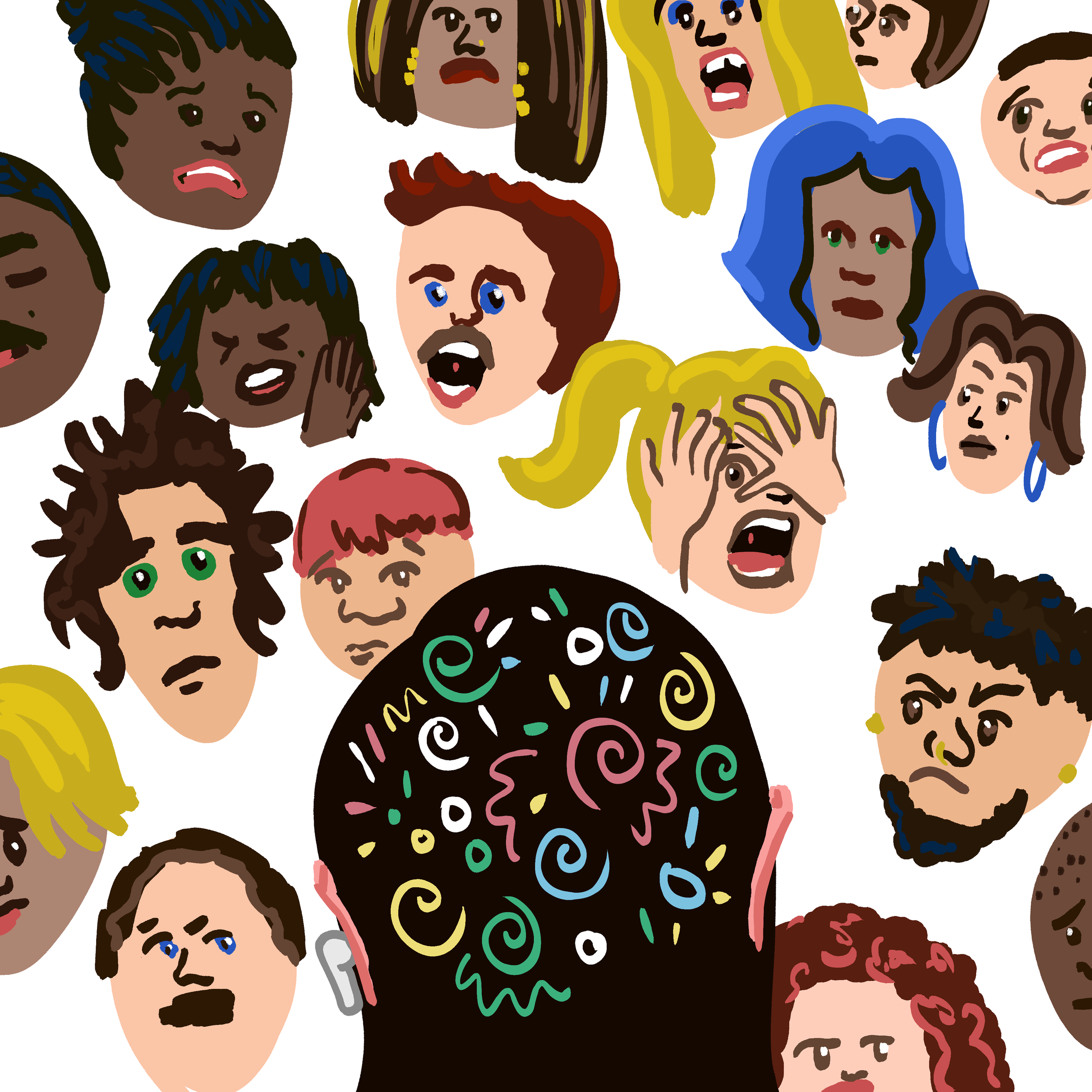
Illustration of a woman with a pattern using the disability pride flag colors in their brain. The woman is facing away from the camera while a crowd of scared people face the camera. Acknowledging the fear people have around the word disability.
The Unfamiliar is Scary
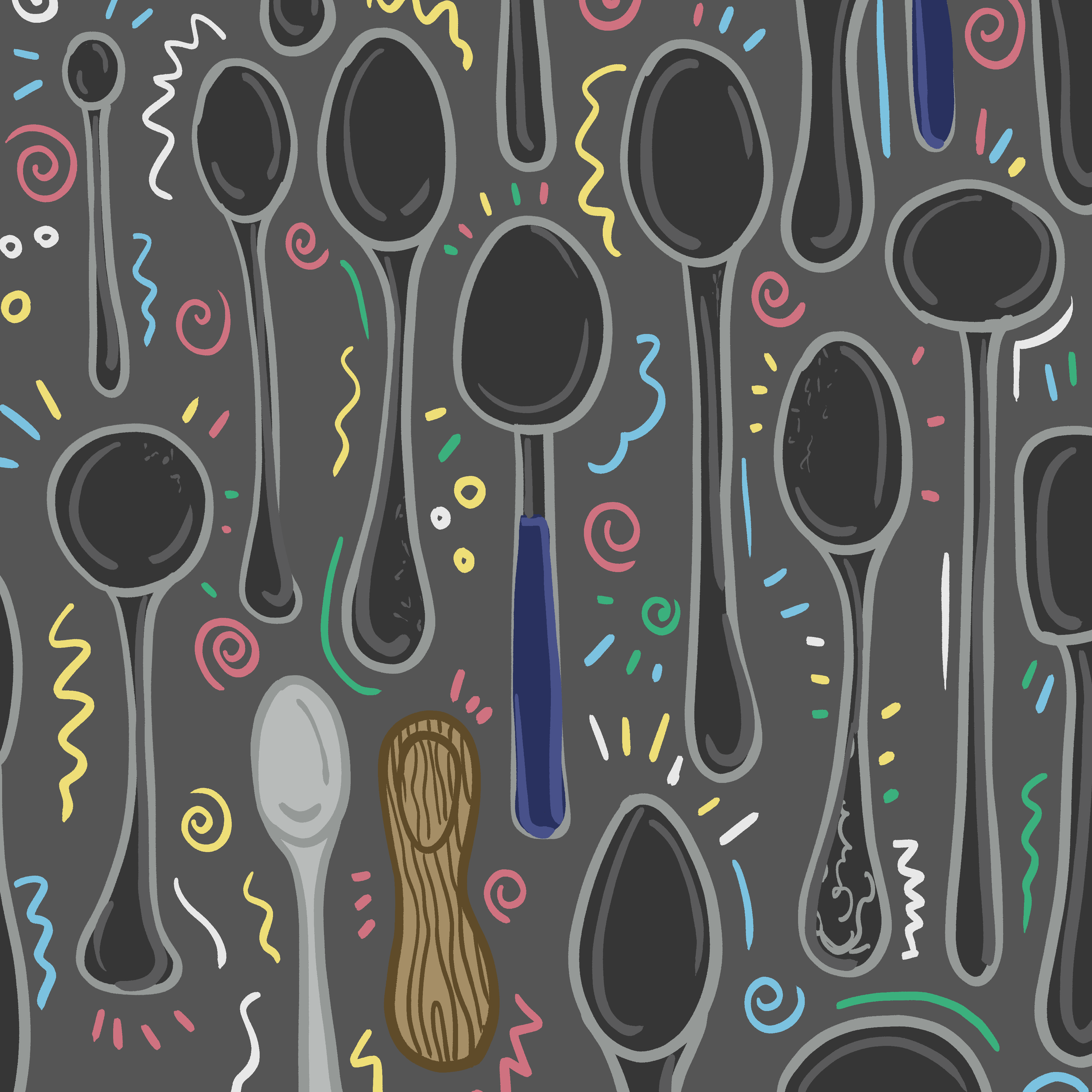
Illustration of a variety of different spoons, representing that what spoon I choose has a big impact on how my meals taste as a person with Sensory Processing Disorder.
Spoon Diversity
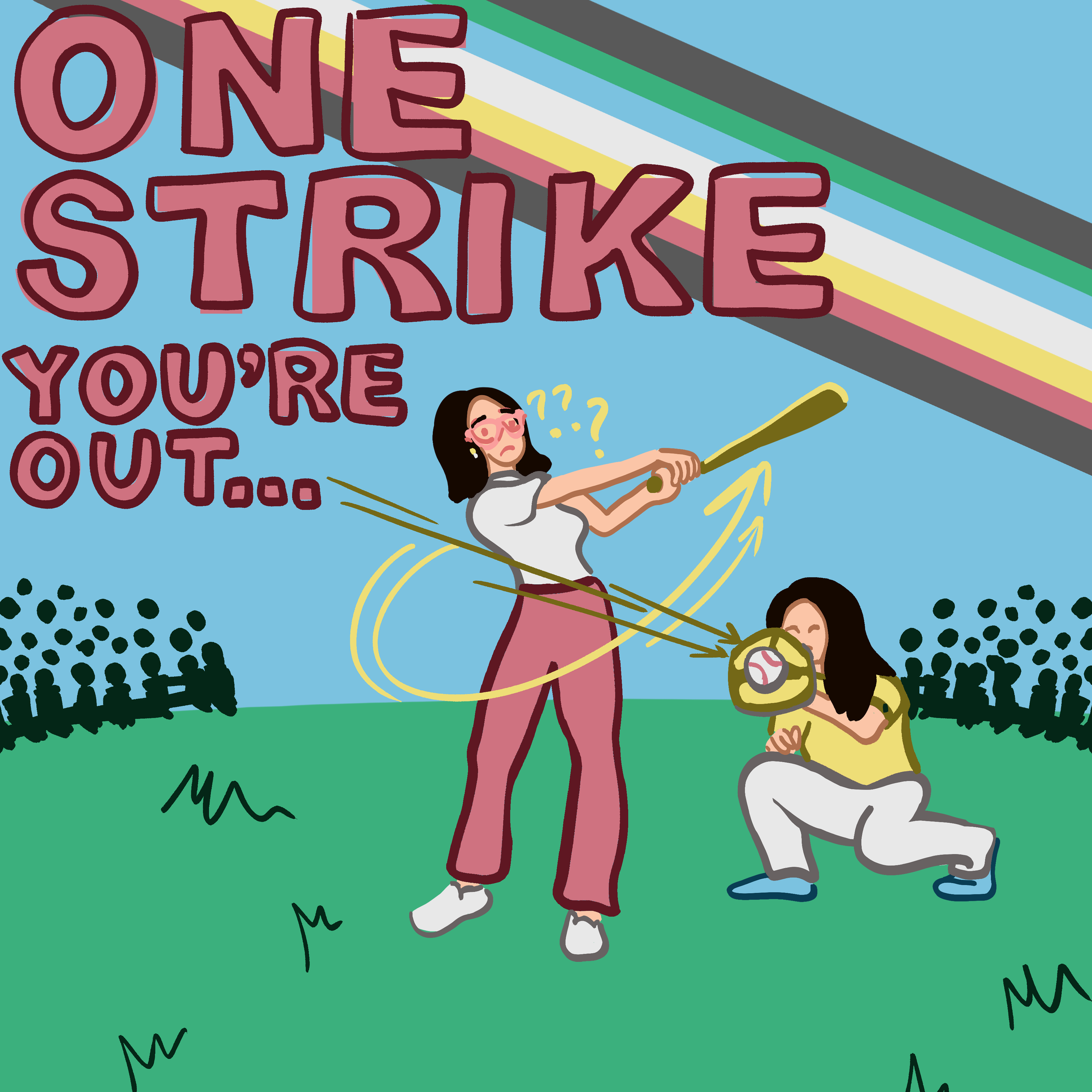
Illustration of a woman swinging a baseball bat. The woman missed the ball though. The text above her reads One Strike and You're Out acknowledging that people generally have less patience for people with disabilities.
One Strike and You’re Out
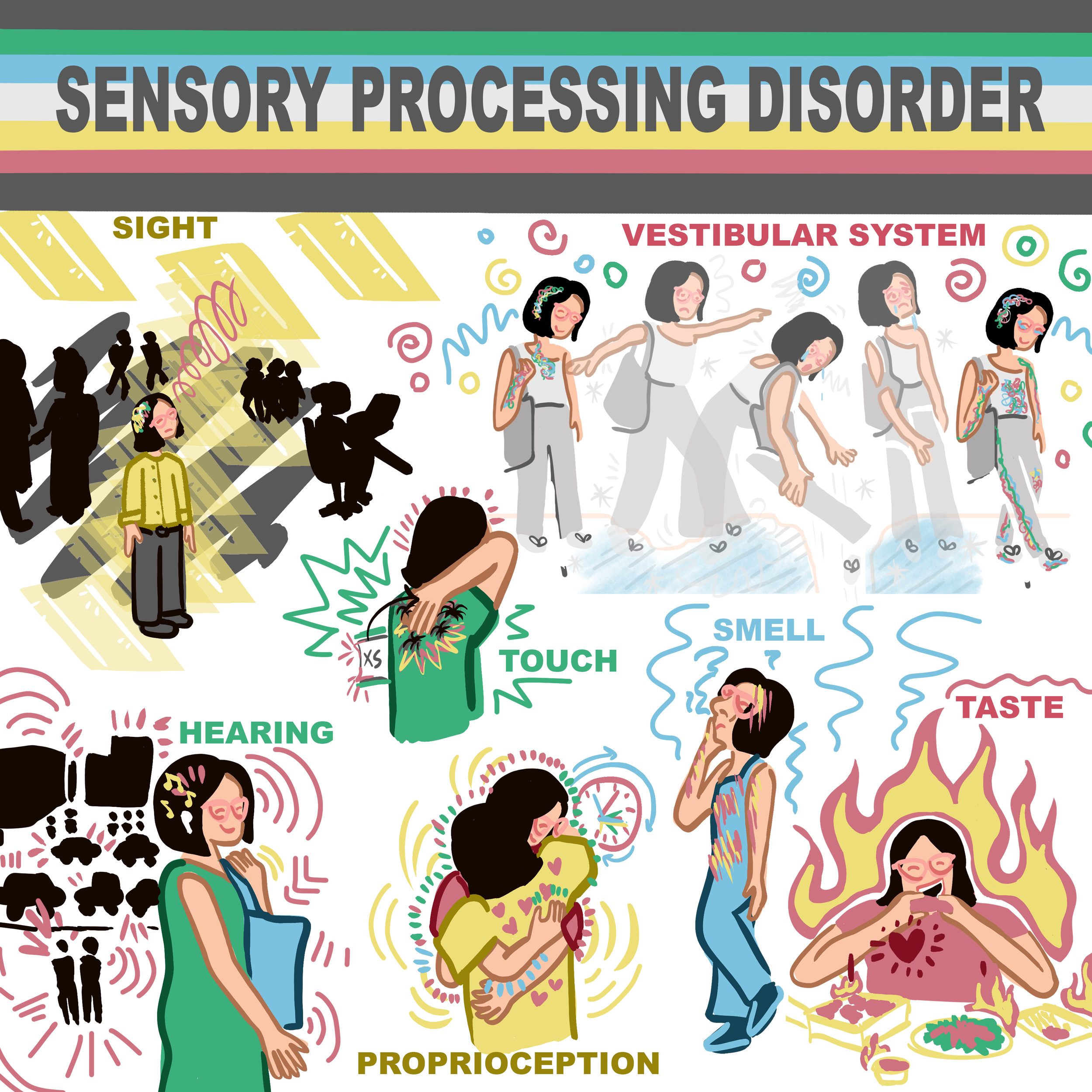
Illustration of a women with Sensory Processing Disorder. She is sensitive to lighting, touch, sound, proprioception, smell, taste, and her vestibular system.
Sensory Processing Disorder
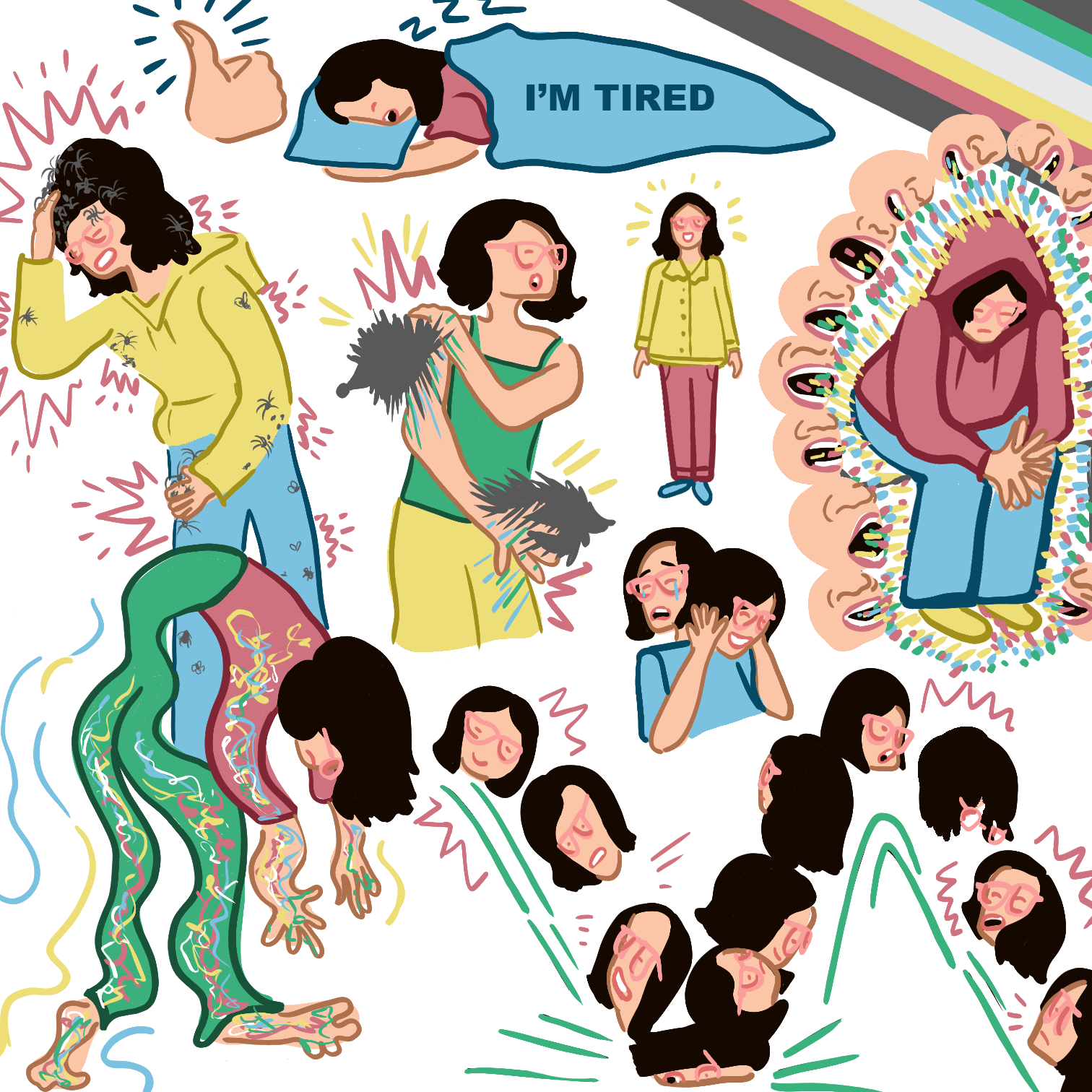
Illustration of a woman experiencing sensory overload. She feels itchy, wobbly, tired, trapped, and in pain.
Sensory Overload
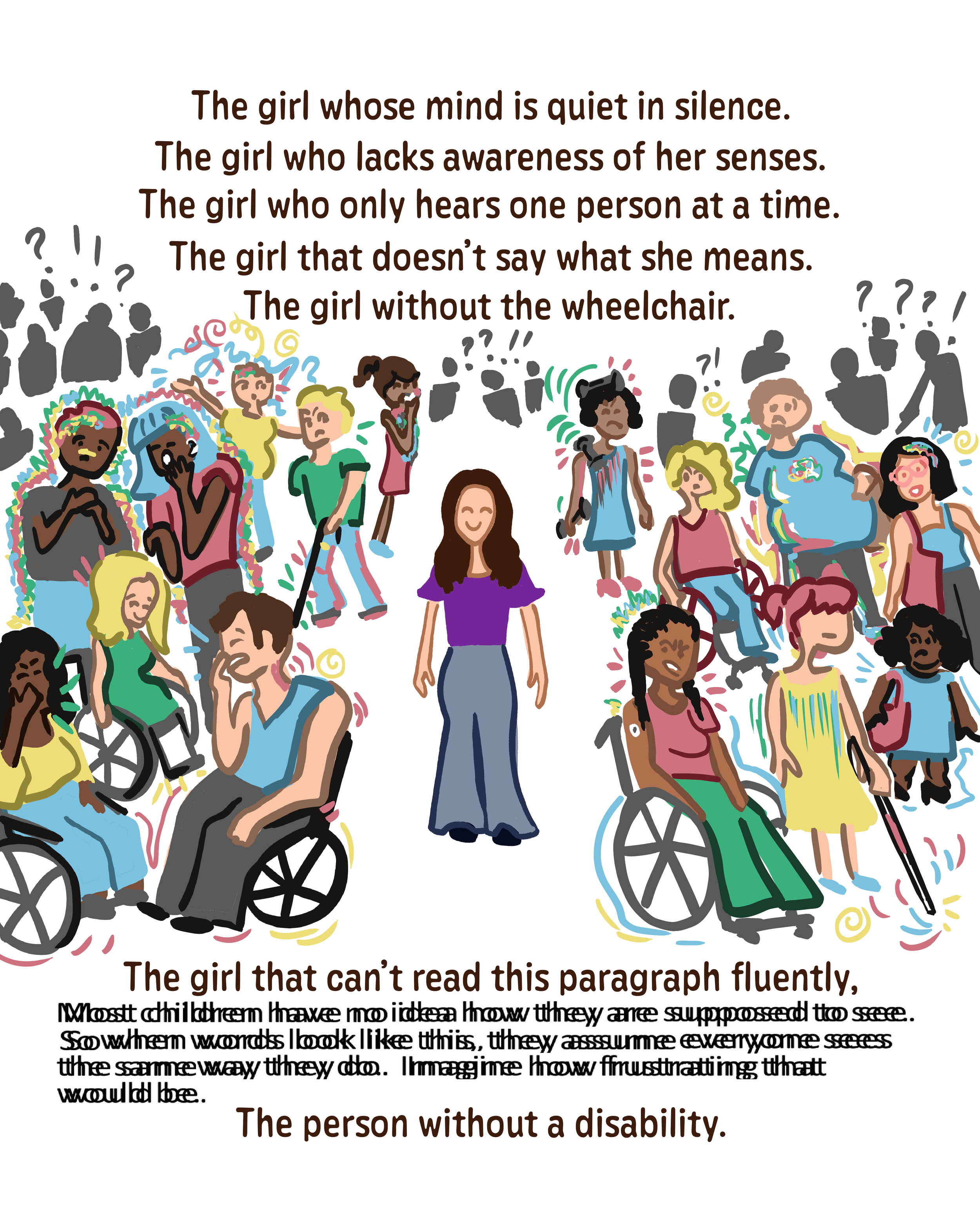
Illustration of a crowd of people with disabilities making 1 person without disabilities feel like they are weird and don't belong. Illustration includes a body of text describing things people with disabilities can do that people without disabilities can't do, essentially flipping the script.
The Girl Without The Wheelchair